

Choosing the right pool system is essential for maintaining water quality, efficiency, and long-term performance. While residential and commercial pools may look similar on the surface, the systems that support them are very different. Understanding the difference between residential and commercial pool systems helps pool owners, facility managers, and hospitality businesses make informed decisions about equipment, filtration, and system design.
This article explains how residential pool systems and commercial pool equipment differ, why proper swimming pool system design matters, and how professional expertise ensures reliable performance for both environments.
Difference Between Residential and Commercial Pool Systems
Residential and commercial pool systems are designed for different usage levels, operating conditions, and performance expectations. The table below highlights the key differences between the two.
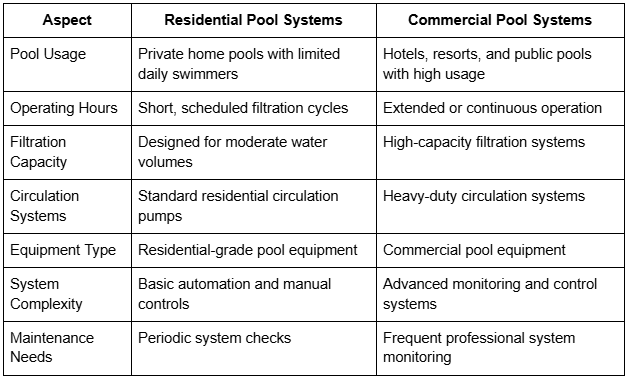
These differences directly impact water quality, energy efficiency, and system reliability. Using residential pool systems in commercial environments often leads to performance issues, increased maintenance, and higher long-term costs. Commercial pools require equipment and systems that can handle continuous demand without compromising filtration effectiveness or operational stability.
Swimming Pool System Design Considerations
Effective swimming pool system design is based on how the pool will be used, not just its size. Residential pool systems are typically designed for smaller swimmer loads and intermittent use, while commercial systems must support consistent circulation and filtration throughout the day.
System design considerations include:
- Matching filtration capacity to pool volume and usage
- Ensuring proper circulation to avoid stagnant water
- Selecting equipment that supports energy-efficient operation
- Planning for long-term performance and system durability
Professional electromechanical design ensures that pool systems operate efficiently under real-world conditions. Well-designed systems reduce unnecessary strain on equipment, maintain stable water quality, and help control operational costs over time.
Common Mistakes When Choosing Pool Systems
One of the most common mistakes is assuming that residential and commercial pool systems are interchangeable. Installing residential-grade equipment in a commercial pool often results in inadequate filtration and reduced system lifespan.
Other common issues include:
- Undersized filtration systems that cannot handle usage demands
- Poor circulation design leading to uneven water quality
- Ignoring future usage increases or operational changes
- Relying on basic equipment without professional system assessment
Avoiding these mistakes requires a clear understanding of system requirements and professional guidance during system selection and design.
How Efstaco Pools Supports Residential and Commercial Pool Systems
Efstaco Pools specialises in electromechanical pool systems for both residential and commercial environments. Our expertise focuses on:
- Designing pool systems based on usage and performance needs
- Supplying and installing appropriate pool equipment
- Optimising filtration and circulation systems
- Supporting long-term system reliability and efficiency
By aligning equipment selection and system design with real operational requirements, Efstaco Pools helps ensure consistent water quality and dependable pool performance.
Why Proper Pool System Design Matters
The difference between residential and commercial pool systems lies in their design, capacity, and operational demands. While residential pool systems support moderate use, commercial pool equipment is built for continuous operation and higher performance requirements. Proper swimming pool system design plays a critical role in maintaining water quality, efficiency, and long-term reliability.
Choosing the right pool system with professional guidance ensures that both residential and commercial pools operate effectively, safely, and sustainably.
FAQs
1. Can a residential pool system be upgraded to commercial standards?
In some cases, residential pool systems can be enhanced with higher-capacity equipment, but full commercial performance usually requires purpose-built commercial pool systems.
2. How does pool usage affect system design?
Pool usage directly impacts filtration capacity, circulation rates, and equipment selection, making usage a key factor in swimming pool system design.
3. Are commercial pool systems more energy-intensive?
Commercial pool systems often operate longer hours, but modern commercial pool equipment can be designed to improve energy efficiency when properly configured.
4. Do residential and commercial pools use the same filtration principles?
Both systems rely on filtration and circulation, but commercial pool filtration systems are designed to handle higher swimmer loads and continuous operation.
5. What happens if pool systems are not designed for actual usage?
Systems that are not matched to usage may experience poor water quality, increased wear on equipment, and higher operational costs.
6. Is automation more important in commercial pool systems?
Automation plays a larger role in commercial pool systems, helping manage filtration cycles, system monitoring, and operational consistency.
7. How often should commercial pool systems be professionally reviewed?
Commercial pool systems benefit from regular professional assessments to ensure performance, efficiency, and long-term reliability.